“then plan / how we may help his journey”: The Female Rule, Hospitality, Gift-Giving, and the Passing of Paradise in Tolkien and Homer
There is a story about a king in exile, long-travelled, about to fight for his throne. On his journey, he comes to a peaceful refuge, related to water, ruled by a couple with a strong queen who must be shown reverence. The ruling couple’s offspring is a potential love interest, and the wandering king leaving the refuge with generous gifts leads to a major upheaval for that realm.
This can obviously describe Aragorn on his way to claim the throne of Gondor, pausing in Lothlórien where his future wife’s grandmother rules the serene woodland realm that furnishes the fellowship with riverboats and other gifts to speed them on a journey that will spell the end of their realm. Equally, though, it can be applied to a central place from the first half of Homer’s Odyssey, currently returned to the public conscious through Christopher Nolan’s long-expected adaptation.
The Odyssey Connection
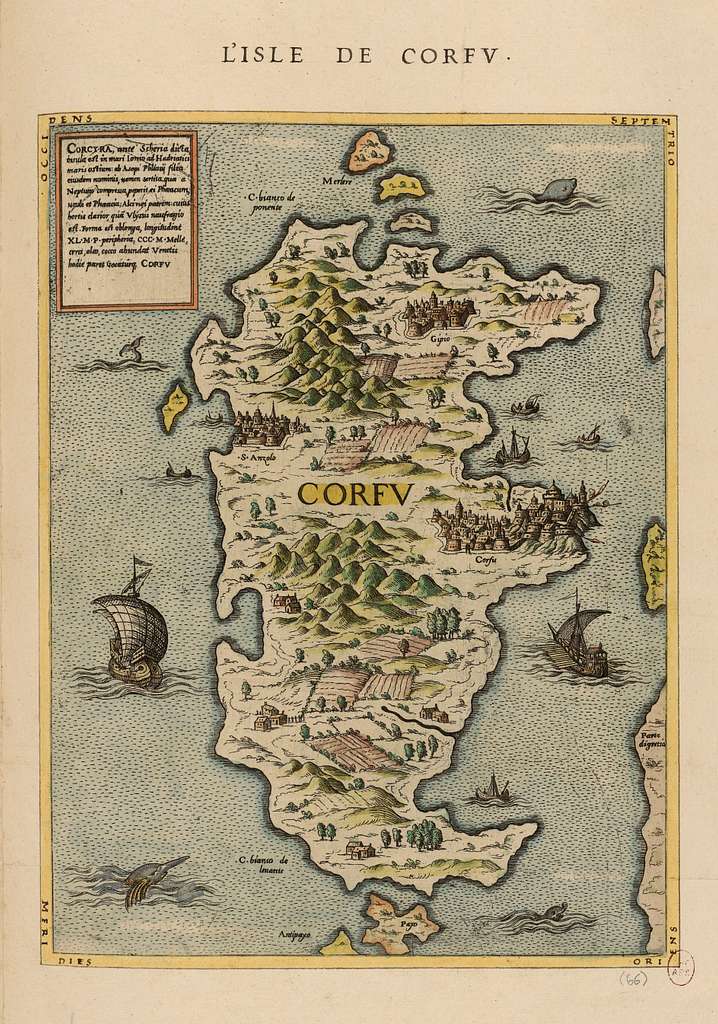
In Books vi–xiii of the Odyssey, the titular hero gets stranded – literally – in one final place before reaching his home: in Scheria, traditionally identified as Corfu, he meets the Phaeacians and their King Alcinous and Queen Arete, who have built themselves a peaceful haven and refuge, famed for helping people lost at sea. Here, Odysseus rests, recounts his tales, and is eventually sent on his way heavily laden with gifts, only for the Phaeacians to incur the wrath of the sea god Poseidon who begrudges Odysseus his safe return, and decides to punish Scheria for it.
Christopher Nolan’s adaptation completely skips this part of the narrative, with some crucial aspects of the place – especially Odysseus recounting his adventures – given to Kalypso instead. The following will therefore remain firmly concerned with the text of Homer, in which this episode plays an important role.
J.R.R. Tolkien presumably did not just want to write his own version of that particular story – the differences are too numerous, and the similarities too incidental for such a theory – but the multitude of similarities is remarkable, and makes for an entertaining comparison. The two stories offer two potentially related narrative soups from the infamous Cauldron of Story”.1 In both cases, the realms of refuge fulfil similar narrative functions and display similar characteristics which allow an interesting exploration of narratological concepts in Tolkien’s The Lord of the Rings and the Odyssey. The two stories offer different depictions of the sanctity of hospitality, as well as affording perspectives on the giving of gifts. Both stories furthermore feature strong female rulers, and approaching the scenes through the lens of gender studies will reveal that these characters somewhat invert stereotypical gendered roles.
Guests in Foreign Lands
I have argued extensively that Aragorn and Odysseus are strikingly similar characters, mainly by virtue of being on almost never-ending journeys. Odysseus has been gone from home for almost twenty years when the Odyssey takes up the story. He finally reaches Scheria as a sole survivor, stranded on the beach without any possession or much hope for the future. Aragorn’s forefathers had been in exile for generations, ranging in the North, and he himself had been doing so for decades, venturing far South as necessity dictated it. As the fellowship reach Lothlórien, only two members of the group have been lost – let us not forget Bill the Pony! – but they are at an emotional low-point due to the recent loss of Gandalf, and Aragorn feels the renewed pressure to decide between the Ring quest and his personal mission for the throne of Gondor.
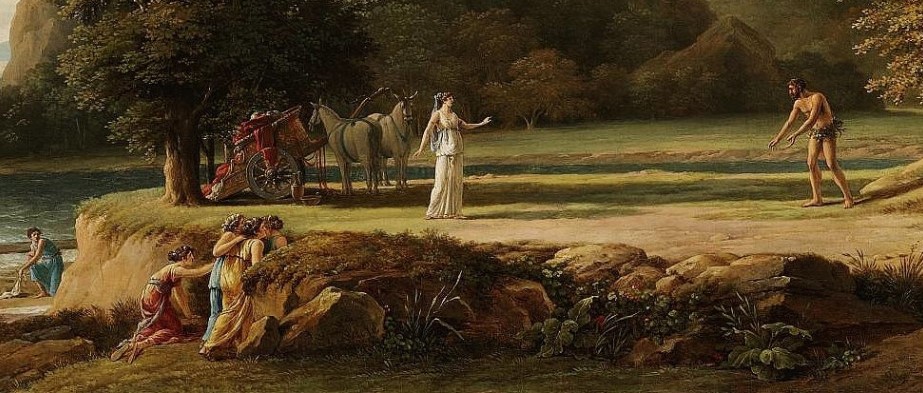
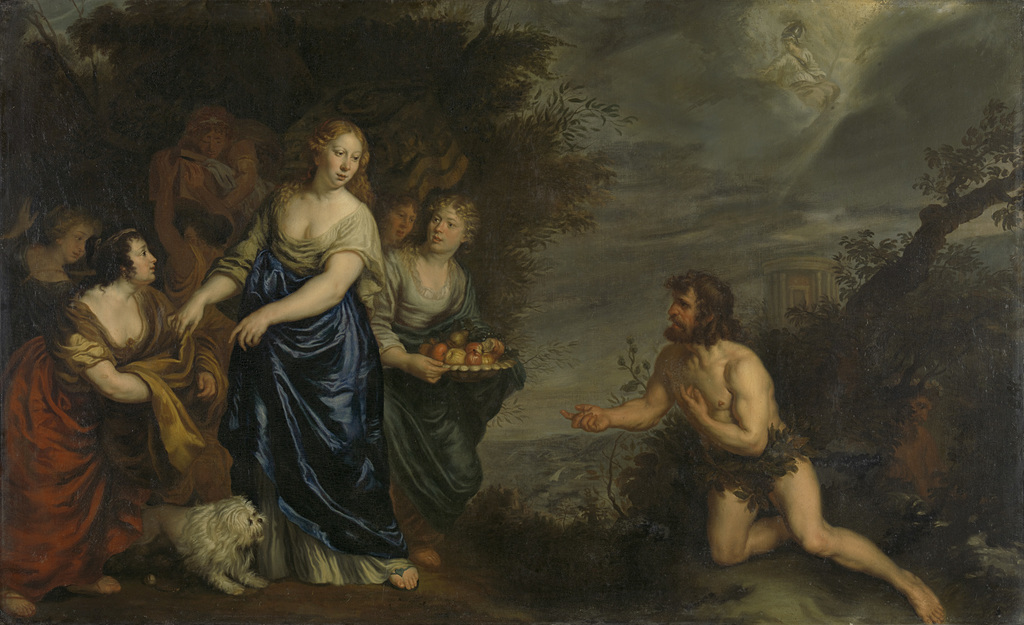
Odysseus comes to Scheria, desolate and alone, his strength depleted and his hope all but gone. Helped to sleep by his patron goddess Athena – who continues to pull the strings in the background – he meets the king’s daughter, Nausicaa, who is immediately smitten with him: “I hope I get a man like this as husband, / a man that lives here and would like to stay” (vi:245f., p. 205),2 a wish later echoed by her father (cf. vii:312-314, p. 218). Spurred on by the goddess, she asks him to follow her home and win over her parents. She is, of course, unsuccessful in her initial plan, as Odysseus returns to Ithaca and his wife Penelope. Some post-Homeric traditions, however, tell of a marriage between Nausicaa and Odysseus’ son Telemachus.3
Aragorn, in contrast, is no stranger in Lórien. “It is eight and thirty years of the world outside” (2:vii, p. 355) since he visited the woodland realm, Celeborn remembers, but one must presume that he and Galadriel have followed Aragorn’s fortunes with interest, given that he is betrothed to their granddaughter Arwen. When asked what gift he wishes of her, Aragorn acknowledges that Galadriel cannot grant him “the only treasure that I seek” (2:ix, p. 375) but the green elfstone which she bestows upon him in reply, once her gift to Celebrian who passed it on to her daughter Arwen (cf. ibid.), must be read as an endorsement of him as grandson-in-law.
Tales of Two Queens
Galadriel is also the focal point of the first major thematic congruence between Scheria and Lothlórien, which reveals itself when considering the stories through the lens of gender studies. Galadriel is “one of the most dynamic female characters within Tolkien’s writing scope”4 according to Annie Brust, and Lisa Hopkins argues that “she and Celeborn are no conventional husband-and-wife team of the sort that would have been familiar to Tolkien’s contemporary readers.”5 Helen Armstrong observes that Tolkien consciously developed her into an active heroine, making her “more and more powerful as Tolkien’s idea of her developed.”6

I have argued in a presentation for the Tolkien Society’s Big Read (available only to members) that one of the many ways Tolkien achieved this distinctly powerful role was through what he presents as Galadriel’s and Celeborn’s areas of interest in their direct speech in “The Mirror of Galadriel.” From a diffuse picture in the early draft, the majority of first-person pronouns change speaker or grammatical number to achieve the published text in which Galadriel is presented as a foreign policy-minded leader, whereas Celeborn emerges as more of a stay-at-home husband who is powerful in his own right but more concerned with matters of home and hearth than global politics. This is adapted perfectly in the relevant cutscene from the LEGO computer game. The prominence of a female ruler – although not quite such a strong reversal of expected gender stereotypes – also appears in Scheria.
Alcinous is a strong ruler in his own right, “just like a god” (vi:308, p. 207), but Odysseus is advised multiple times to prioritize the queen to ensure his successful return home. “But pass him by,” Nausicaa encourages him, “embrace my mother’s knees / to supplicate. If you do this, you quickly / will reach your home however far it is” (vi:308-311, p. 207), and he is later reminded by Athena who guides him to the palace: “First greet the queen” (vii:53, p. 210), for she is revered by the Phaeacians, and “she solves disputes to help the men she likes. / If she looks on you kindly in her heart, / you have a chance of seeing those you love, / and getting back again to your big house / and homeland” (vii:74-78, p. 210). Not quite as focused on foreign policy as Galadriel, and with a husband who ends up doing the majority of the talking eventually, Arete is still considered a force to be reckoned with, and the force to get on one’s side if hoping for a successful endeavour. Importantly, she is not only responsible for the warm welcome of guests, but her goodwill is said repeatedly to influence the success of Odysseus’ eventual return home. Her interests and influence extend beyond the borders of her palace and realm.
Both female rulers are afforded a prominence of place in the text far surpassing that which stereotypical views on gender roles would assume, without completely upending all societal expectations. In one regard, for example, they and their husbands all conform to expectations: both Scheria and Lothlórien prove generous hosts to their guests in need, welcoming them – albeit with varying degrees of openness at first – and eventually sending them on their way richly laden with gifts.
Hospitality and Hostilities
The welcome Odysseus receives in Scheria, although only a beggar in rags, is warm and encouraging from the outset. Whilst Athena warns him to “not look at people, / and ask no questions. People here are not / too keen on strangers coming from abroad” (vii:31, p. 209), Nausicaa welcomes him immediately: “But since you have arrived here in our land / you will not lack for clothes or anything / a person needs in times of desperation” (vii:191-193, p. 203). Robert Fagles’ translation goes further: “’Stranger,’ the white-armed princess answered staunchly, / friend…” (vi:204f., p. 174)7.
Similarly, when Odysseus first comes to the palace of Arete and Alcinous, the courtiers insist “it is not right to leave a stranger / sitting there on the floor […]. Everyone is waiting / for you to give the word. Make him get up, / and seat him on a silver chair” (vii:159-162, p. 213), and they insist on giving him wine and food. The King makes “Laodamas, his favorite son” (vii:169, p. 213) give him the seat of honour. Without knowing anything about the stranger, he decrees they must “plan / how we may help his journey” (vii:191f., p. 214). All the court having agreed (cf. vii:226f., p. 215), it is only then that Queen Arete approaches him to “be the first to speak to you” (vii: 237, p. 216) and question him about his story. Even when his story reveals the many conflicts he has had with gods and other higher beings, the Phaeacians do not shy back from the hospitality they had offered him.
Lothlórien receives the fleeing members of the fellowship in a decidedly different manner. “’Daro!’ [a voice] said in commanding tone” (2:vi, p. 342), surprising and frightening even Legolas, whose warning to his companions is greeted with laughter from above. Given that there had been little friendly laughter since leaving Rivendell (cf. 2:iii, p.281),8 the mood is immediately tense and threatening, even without the Elf relating that the guards above joke about shooting them in the dark (cf. 2:vi, p. 342). Only then do the hidden archers calm the refugees’ fears, assuring them of their safety for the time. The guards had heard Legolas singing and speaking, “and therefore they did not hinder” (ibid., emphasis added) their entry into Lórien. They also “seem to have had some tidings” (ibid.) of the fellowship and their mission before. Even then, Frodo, Sam, and Legolas are asked up onto one of the flets where a light is shone into their faces in what can hardly be called a friendly gesture (cf. 2:vi, p. 343). Only after an extended interrogation are they invited to spend the night and taken towards Caras Galadhon the following day, famously blindfolded for much of the way.
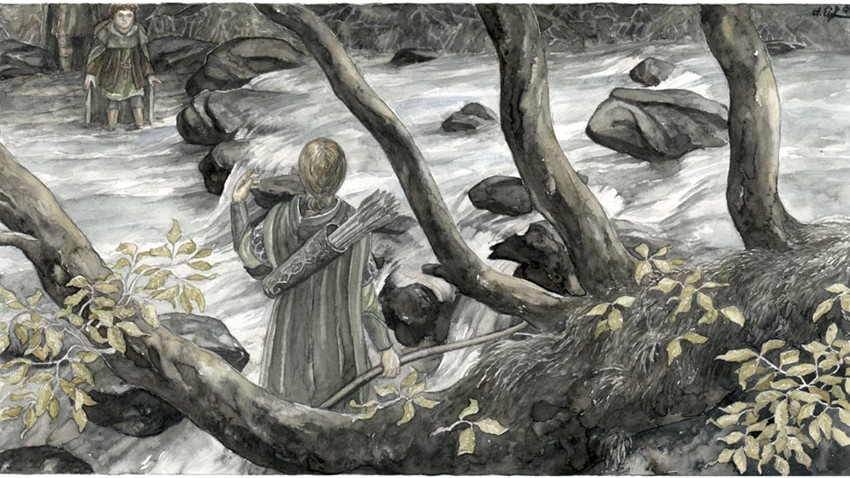
Finally arriving at court, the hostile welcome continues at first. Although Celeborn’s first words to the listed members of the fellowship are thrice “welcome” (2:vii, p. 355), another interrogation ensues, and upon learning what fate befell Gandalf, Celeborn exclaims “had I known […], I would have forbidden you to pass the northern borders, you and all that went with you” (2:vii, p. 356). The Galadhrim greet the refugees harshly and with threats at first, even though they recognized one of them as a kinsman, and are informed about their general purpose and identity. Having thus set the tone, they interrogate their visitors, and, learning the details of their plight, they regret their initial welcome, hostile as it was. This is a far cry from the unconditional welcome given by the Phaeacians, which does not waver even as they learn of Odysseus’ ill favour with the gods. To be fair to the Elves – boring and annoying as it may be – they live in times of war with active border skirmishes, and they eventually accept and welcome the fellowship despite their initial misgivings, and help them on their way, as do the Phaeacians.
The Giving of Gifts
Furthermore, the company leave Lothlórien, as does Odysseus Scheria, laden with gifts. Every member of the fellowship is furnished with cloaks and hoods woven by the Lady of the Wood and her maidens especially (cf. 2:viii, p. 370). They are given a generous supply of Lembas, three boats – the Galadhrim are strongly connected to the waterways next to and around which they live – and some coils of Elven rope, much to Sam’s delight (cf. 2:viii, p. 371). These gifts are acknowledged to show how “high in the favour of the Lady” (2:viii, p.371) the departing companions are. In addition, each member is given a personal gift, which range from the practical like Legolas’ bow and arrows, to the nice-to-have but ultimately unnecessary like the richly decorated gold and silver belts given to Boromir and two of the Hobbits, to the highly symbolic and ultimately useful like Frodo’s phial and Sam’s gardener’s box (cf. 2:viii, p. 375f.).
Aragorn and Gimli both receive additional gifts that are purely symbolic and of no tangible use on the journey ahead: I have already remarked on the significance of Aragorn’s green gemstone as a symbol for the approval and renewed high status the Elves afford him. Gimli’s locks of Galadriel’s golden hair are of even less practical use but even more symbolic, serving a purely diplomatic purpose. Thijs Porck remarks upon the importance of reciprocal gift giving in many of Tolkien’s precursors. Finding “fault with some aspects of the role of gifts in Anglo-Saxon heroic literature”9, Tolkien devised an alternate system in his fiction. “Gift-giving,” William Ian Miller argues, “gave rise to social relations and adjusted the status of the parties in relation to each other. The giver gained prestige and power from the exchange. He exacted deference from the receiver and obliged him to reciprocate.”10 Tolkien criticized that latter aspect, most prominently through Sauron in his guise of Annatar, buying loyalty with gifts or enslaving through the Rings of Power. Other instances of gift-giving in Middle-earth, however, are painted in a more positive light. Precisely because they are at times not useful but merely symbolic, the gifts of the Lord and Lady “call to mind the benefactors and serve to leave a lasting impression of Lothlórien”,11 Porck concludes. The relationship they constitute is one not of dependence and debt, but heartfelt loyalty and love.
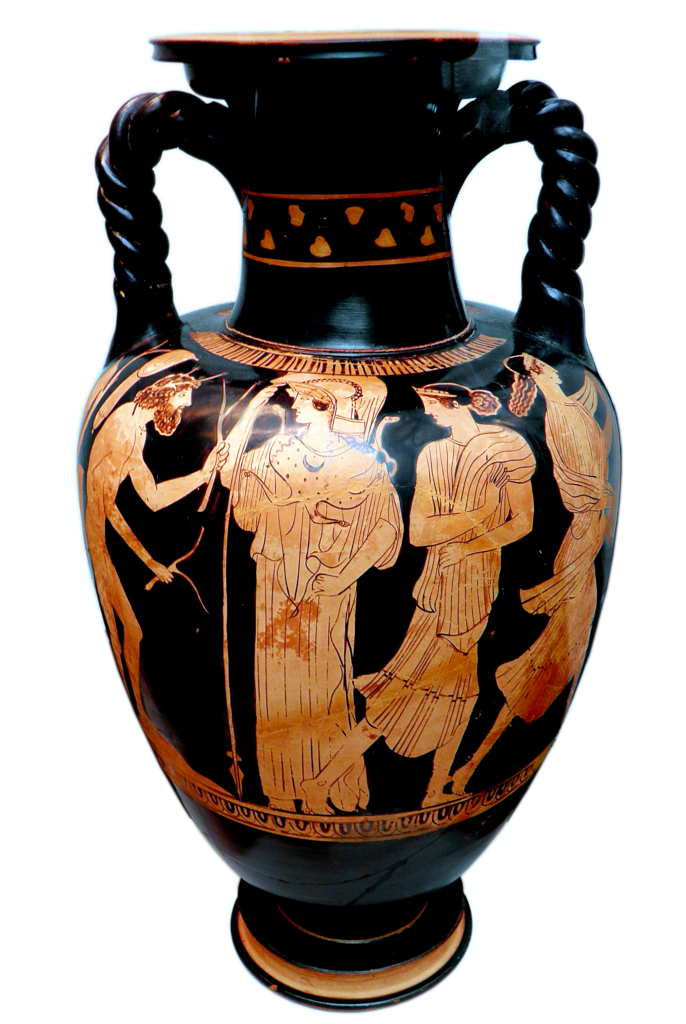
Similar considerations are at play in the Odyssey. Odysseus not only receives shelter and help getting home but is richly laden with gifts to speed him on his way: “Our guest has clothes packed up inside a trunk, / and other gifts that we have given him. / Each of us now should add a mighty tripod / and cauldron” (xiii:10-13, p. 316). Everybody at court adding a tripod and cauldron? How many cauldrons can one man need? The load of goods Odysseus is eventually sent home with is so great that it spurs Poseidon’s wrath who complains to Zeus about this “magnificent array of gifts: / bronze, heaps of gold and fine-spun clothes, far more / spoils than he ever would have won at Troy / if he had got out safely” (xiii:138-141, p. 321).
No wonder that Ian Morris argued that “Greece in the eight to sixth centuries B.C. is a particularly good place to study the relationships of the gift and the commodity in an early state society. There are very clear references to the importance of gift exchange in the literary sources, although there is often ambiguity as to their precise interpretation.”12 Marc Domingo Gygax agreed on “the importance of presenting actions or objects as either gifts or countergifts, and of highlighting whether such actions or objects surpassed the perceived value of the previous gift.”13 Odysseus fondly remembering Scheria after his adventures, and sending his son to be betrothed to Nausicaa makes perfect sense in this context: sending Odysseus off with rich gifts ensures not only his friendship – surely that would have been guaranteed by virtue of their help alone – but positions the new friend for success. The gift that establishes the friendship simultaneously makes it more likely that the new friend will end up – or return to – a position of influence. Counting on the implied reciprocity of gifts, but also their tangible effect on the one laden with gifts, the gifts given to Odysseus appear as a shrewd investment in the future.
The Passing of Paradise
Sadly, though, neither Lothlórien nor Scheria have much of a future in either narrative. In both cases, the paradisiacal realms face a destructive catastrophe upon the hero’s departure, not coincidentally but because they do what may be considered the right thing. Galadriel acknowledges the ringbearer’s mission as the “footstep of Doom” (2:viii, p. 365), for his failure will expose them to Sauron, but if successful, “then our power is diminished, and Lothlórien will fade, and the tides of Time will sweep it away. We must depart into the West, or dwindle to a rustic folk of dell and cave, slowly to forget and to be forgotten” (ibid.). The three Elven rings are tied to the One Ring’s existence; therefore its capture or destruction will inevitably mean the end of Lothlórien. Offered the Ring, however, Galadriel passes the test and prevails: “I pass the test […] I will diminish, and go into the West, and remain Galadriel” (2.vii, p. 366). Entirely aware of the consequences, she does not attempt to grab power and extend her realm’s existence.
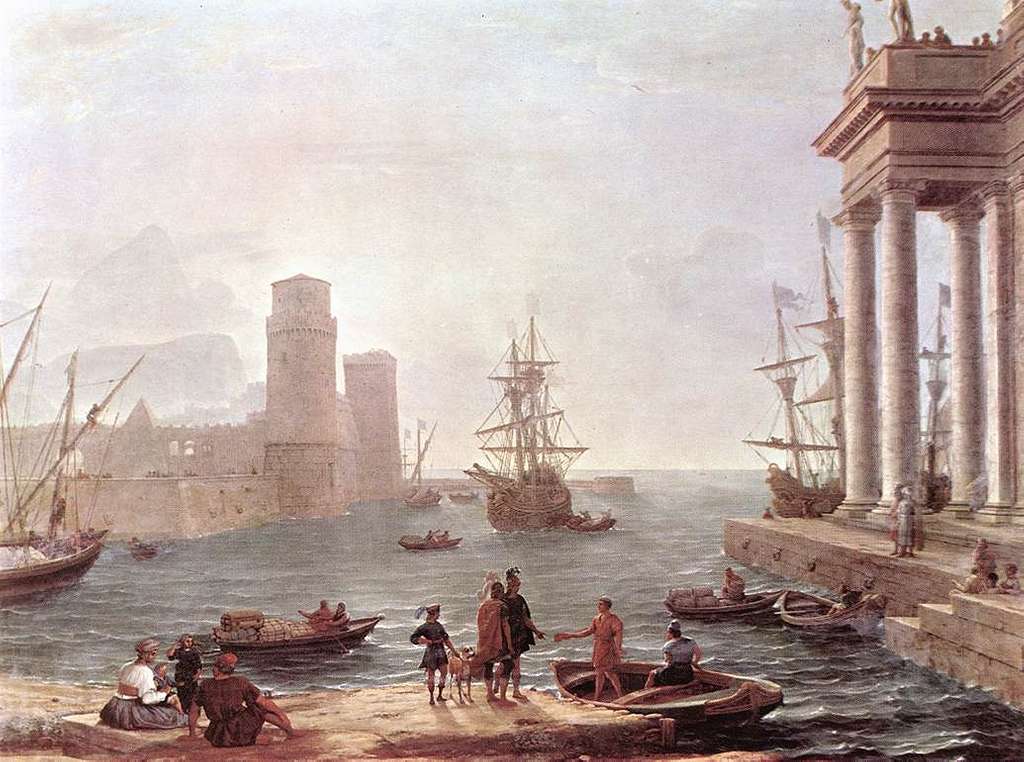
Similarly, King Alcinous of Scheria had at least some warning of the impending doom of his kingdom. Enraged by the help and rich gifts the Phaeacians afforded Odysseus whom he hates, Poseidon decides “when that fine ship of those Phaeacians / comes back from helping him across, I want / to smash it in the sea, and overwhelm / their city with a mountain, to prevent them / from ever guiding travelers again” (xiii:150-154, p. 321). Poseidon having done so (cf. xiii:162-164, ibid.), Alcinous remembers a prophecy: “My father long ago […] foretold / that one day great Poseidon would destroy / a ship on her return from such a journey; / the god would hide our city with a mountain. / And now the old man’s words are coming true. / So all of you must listen to me now. / Stop helping visitors to travel onward” (xiii: 171-180, p. 322). Like Galadriel, Alcinous was aware of the dangers of helping travellers, and he must have realized Odysseus did not enjoy the favour of the Sea God. And yet, the Phaeacians chose to help, at least until Poseidon’s actions made it all but impossible.
Still, despite all similarities, Lothlórien is no mere copy of Scheria. Neither are their similarities entirely coincidental, though. Rather, some of the similarities – especially this last one – can be explained through the narratological functions both places fulfil in their respective narratives. Both the realms of the Phaeacians and of the Galadhrim fit the idea of the apocalyptic world of Northrop Frye who calls it “reality in the forms of human desire, as indicated by the forms they assume under the work of human civilization. The form imposed by human work and desire on the vegetable world, for instance, is that of the garden, the farm, the grove, or the park.”14 Highly “appropriate to the mythical mode,”15 imagery and symbolism of a highly ordered and decorated golden city or of a fertile productive garden or forest symbolically “presents the infinitely desirable.”16
This description is certainly true for Scheria which features, in addition to its impressive town and the majestic palace, a mystical garden: “The trees are tall, luxuriant with fruit […]/ and the crop / never runs out or withers in the winter, / nor in the summer. Fruit grows all year round” (vii: 115-119, p. 212). Coupled with the overflowing presents, the immediate implied offer of a royal princess’ hand in marriage, and the seemingly unceasing helpfulness of the hosts, the Phaeacians are an apocalyptic idyll in the sense laid out above. The same holds true for Lothlórien, albeit slightly differently. The Galadhrim, too, present an idealized apocalyptic city and garden to Aragorn and his companions.
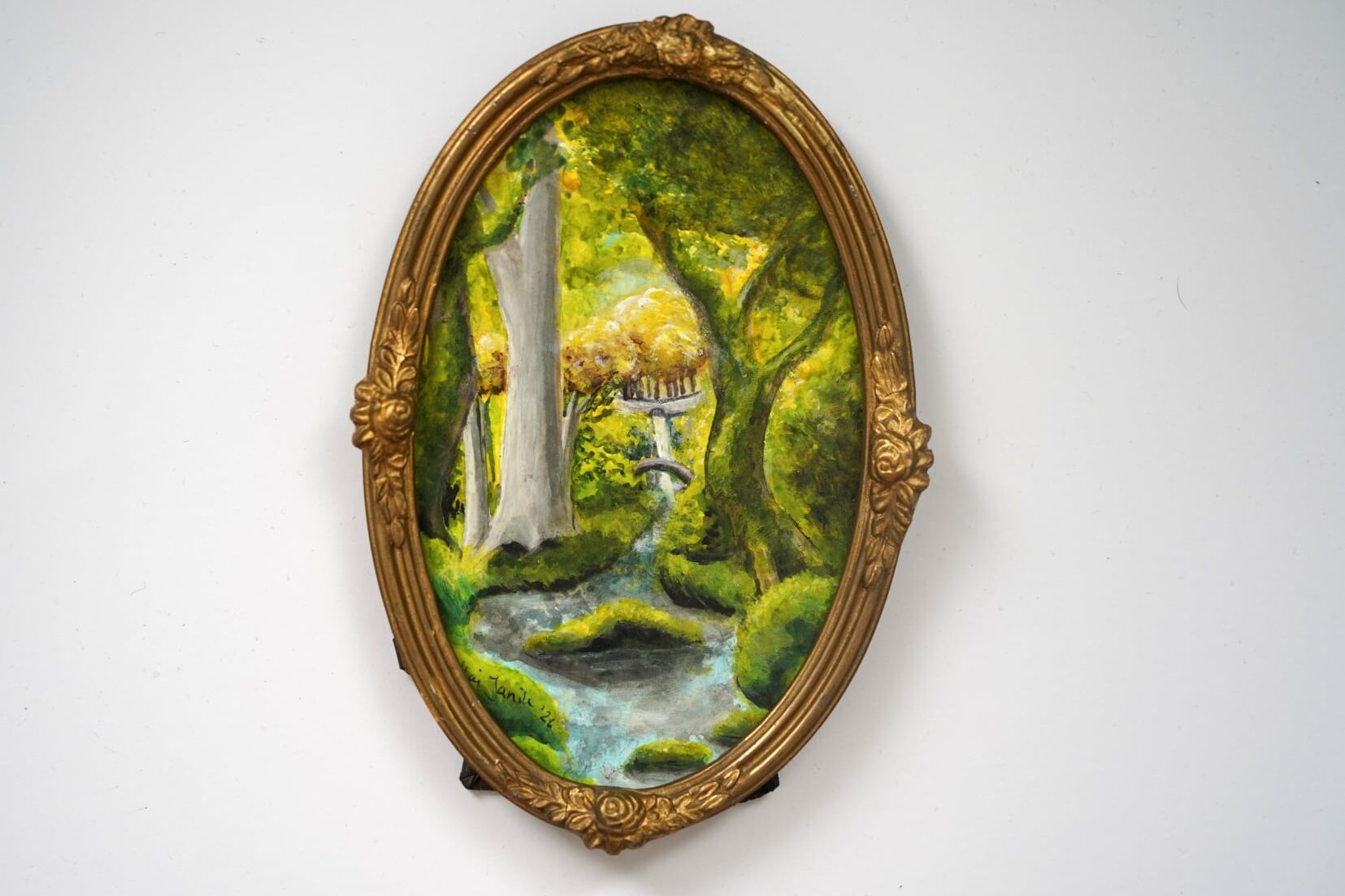
Taken in combination with ideas of the monomyth and hero’s journey, which does not end with the “penetration to some source of power”17 or refuge but must continue to the “life-enhancing return,”18 the destruction of paradise is inevitable. “The hero may have to be brought back from his supernatural adventure by assistance from without. That is to say, the world may have to come and get him,”19 and even though the heroes had technically already left the place by the time of its destruction, no ideal world can ever be permanent. Because it cannot wholly belong to history, it must end in some way. Both Scheria and Lothlórien follow this logical pattern: The apocalyptic world appears to the reader just before it dis-appears entirely.
Conclusion
Writers and poets, therefore, are bound by the narratological rules of storytelling. Because these realms fulfil similar functions in the story, that of a refuge that catapults the hero into a new phase of the quest, better equipped than before, and because the ideal refuge is always apocalyptic in Northrop Frye’s terminology, both realms must by necessity display certain similarities; some of these are dictated by the art of storytelling, others may be incidental. Both Lothlórien and Scheria present the reader with strong examples of female leaders, they treat their guests very differently but ultimately hospitable and generously, and both realms are faced with their end because of the hero’s departure. Tolkien was never merely copying source material, and just because he knew the Odyssey and once appreciated it, it may not have been at the forefront of his imaginative process. Both stories, however, employ ingredients from the same larder to stir their respective soup in the Cauldron of Story. Who knows, maybe it happens to be one of those many cauldrons Odysseus brought home to Ithaca?!
- Cf. Tolkien, J.R.R. „On Fairy-Stories“ in The Monsters and the Critics And Other Essays, edited by Christopher Tolkien, London 1983, 109-161; 125f. ↩︎
- Unless stated otherwise, the quotes are taken from the recent translation by Emily Wilson: The Odyssey, translated by Emily Wilson, New York 2018. ↩︎
- Cf. Belmont, David E. „Telemachus and Nausicaa: A Study of Youth“ in The Classical Journal 63.1 (1967), 1-9 for an exploration of this idea’s plausibility opposite the mainstream tale of Telemachus marrying Circe. ↩︎
- Brust, Annie. Tolkien’s Transformative Women. Art in Triptych, Wilmington 2024; 180. ↩︎
- Hopkins, Lisa. „Female Authority Figures in the Works of Tolkien, C.S. Lewis and Charles Williams“ in Proceedings of the J.R.R. Tolkien Centenary Conference, edited by Patriciay Reynolds and Glen H. GoodKnight (=Mallorn 33/Mythlore 80), Milton Keynes/Altadena 1995, 364-366; 365. ↩︎
- Armstrong, Helen. „Good Gys, Bad Guys, Fantasy and Reality“ in Proceedings of the J.R.R. Tolkien Centenary Conference, edited by Patriciay Reynolds and Glen H. GoodKnight (=Mallorn 33/Mythlore 80), Milton Keynes/Altadena 1995, 247-251; 250. ↩︎
- The Odyssey, translated by Robert Fagles, New York 1996. The difference in verse numbers is due to different editions of the original text being used as a basis. Fagles’ addition of “friend” is not supported by most versions of the Greek text but does not seem inappropriate in essence, given the context. Odysseus is clearly hailed as a welcome stranger, to be treated as a friend. ↩︎
- There is some „laughing“ but the word „laughter“ itself, quite frequent until Rivendell, had since only appeared twice in the text: once to describe the noises on the Redhorn (cf. 2:iii, p. 289) and once as the goblin’s reaction in Moria to the challenge at Balin’s tomb (cf. 2:v, p. 324). ↩︎
- Porck, Thijs. „Reshaping the Germanic Economy of Honour. Gift Giving in J.R.R. Tolkien‘s The Lord of the Rings“. Lembas Extra 2019. The World Tolkien Built, ed. Renée Vink, Leiden 2019, 7-26; 7. ↩︎
- Miller, William Ian. Bloodtaking and Peacemaking: Feud, Law, and Society in Saga Iceland, Chicago 1990; 82. ↩︎
- Porck, Thijs. „Reshaping the Germanic Economy of Honour. Gift Giving in J.R.R. Tolkien‘s The Lord of the Rings“. Lembas Extra 2019. The World Tolkien Built, ed. Renée Vink, Leiden 2019, 7-26; 21. ↩︎
- Morris, Ian. „Gift and Commodity in Archaic Greece“ in Man 21.1 (1986), 1-17; 4. The role of women and female patronage in such a gift-giving economy warrants its own paper, both in the real world as in Tolkien’s invented secondary world. ↩︎
- Gygax, Marc Domingo. „Gift-Giving and Power Relationships in Greek Social Praxis and Public Discourse“. The Gift in Antiquity, ed. Michael L. Satlow, Hoboken 2013, 45-60. ↩︎
- Frye, Northrop. Anatomy of Criticism, Princeton 101990; 141. ↩︎
- Ibid.; 152. ↩︎
- Ibid.; 157. ↩︎
- Campbell, Joseph. The Hero With a Thousand Faces, Princeton 21968; 33. ↩︎
- Ibid. ↩︎
- Ibid.; 192. ↩︎
Picture credits
- L’Isle de Corfu – Bibliothèque nationale de France, France – Public Domain.
- Odysseus and Nausicaa – Rijksmuseum, Netherlands – Public Domain.
- The Chamber of Celeborn and Galadriel (c) Miriam Ellis. By kind permission.
- Crossing Nimrodel (c) Anke Eissmann. By kind permission.
- Odysseus and Athena at the meeting with Nausicaa – Staatliche Antikensammlungen München, Germany – Public Domain.
- Detail from Sea, Harbor, Fog Effect by Claude Lorrain – Musée du Louvre, France – Public Domain.
- Lothlórien (c) Kai Janik. By kind permission.
