“The Man, O Muse, inform, that many a way / Wound”: On Aragorn and Odysseus as Wandering Men in Tolkien and Homer
With Christopher Nolan’s The Odyssey hitting cinemas around the globe this month, one of the most influential texts of European cultural history is back in the spotlight – so why not make it about Tolkien and The Lord of the Rings?! A close comparison of Aragorn and Odysseus, introduced primarily as travellers, suggests a hitherto under-valued connection between Tolkien’s own work, and a Classic which – by his own admission – influenced him greatly.
Tolkien and the Classics
Contrary to Tom Shippey’s assertion that Tolkien was “determinedly hostile” to the Classical tradition1, he drew heavily and openly on the Greco-Roman classical tradition which he had come to know intimately throughout his education. “In retrospect,” argues Hamish Williams, “Tolkien seems to have regarded his early encounter with ancient Greek literature as a kind of formative awakening in aesthetic taste.”2 Tolkien himself, in a letter to Robert Murray SJ from December 1953, recalls that he “first discovered the sensation of literary pleasure in Homer”3 and reiterates the point two years later in his lecture “English and Welsh”, calling his first encounter with Gothic vocabulary “as full of delight as first looking into Chapman’s Homer”4, the translation from which the quote in this text’s title is taken.
As important as his medievalism and the Northern sources were to Tolkien as a scholar and author, the Classics were important to and influential on him as well, especially Homer and his two major epics.5 He started inventing words while learning Greek6 and Christopher Tolkien reports his father’s allusion to Homer’s list of ships from the Iliad in a note on his draft for the siege of Minas Tirith.7 The Classics were on Professor Tolkien’s mind, even when writing The Lord of the Rings, and it is not surprising that some influences will have seeped into that particular Cauldron of Story,8 as has been observed by numerous scholars.9
Homeric Echoes in Tolkien
Whilst “parallels to the Odyssey, and more generally with the Homeric epic poems, have often been emphasized,”10 one under-reported but striking parallel is between Odysseus and Aragorn. Odysseus and Bilbo are a more common comparison, specifically in relation to their encounter with Polyphemus and the Three Trolls respectively,11 and Odysseus’s return to Ithaca and the Scouring of the Shire is another previously established comparison.12 Aragorn has thus far been more closely likened to Aeneas, especially by Robert Morse in his 1986 monograph Evocations of Virgil in Tolkien’s Art. He observes that, like Aeneas, “Strider […] is a defender of ordinary people against their evil foes. Wandering and exile have attached themselves to his character as surely as they were fixed to that of Aeneas and Frodo”13. Aragorn and Aeneas’ focus is towards the future (in Gondor and Latium respectively), both “pay the price of destiny and leadership”14 and “both Aragorn and Aeneas experience a potential distraction in the form of another woman”15, as well as both journeying to the underworld, as frequently observed.16 However, all of this is equally applicable to Odysseus.
Arguably even more so than Aeneas, Odysseus’ name is inextricably linked with the idea of a long exile and seemingly endless wanderings – “extended adventurous voyage” and “intellectual or spiritual quest” are the Wiktionary definitions of “odyssey”, not “aeneid”.17 Save for the frequent flashbacks inside the narrative, both the focus of the Odyssey and its titular hero are unalterably towards Ithaca and the return home, the embodiment of the theme of νόστος/nostos.18 Odysseus constantly grapples with his decisions as a leader, which have resulted in the loss of many of his men, often directly due to his reckless actions. His descent into the underworld in Book XI of the Odyssey is equally as famous as that of Aeneas and Aragorn: just like heroes in an Arthurian tradition apparently need to be given a magic sword, it seems heroes of the Classic tradition have to pass through the underworld.
In addition to these parallels overlooked by Morse, Odysseus is also the exiled king of a still-existing realm, which he will need to win back from usurpers and other threats. Likewise, Aragorn does not set out to settle a new kingdom or city but wishes to reclaim his rightful place on the throne of Gondor, potentially against unwilling stewards, having first or afterwards to contend with other threats. The picture would be even clearer, if one were to discuss the fact that both men have a loving and faithful woman ‘back home’ who waited for a long time, who they will win with winning (back) their kingdom, and who is, in both cases, curiously, closely associated with weaving. Odysseus is therefore the better fit for a close comparison with Aragorn as opposed to Aeneas who more closely resembles Elendil or Isildur, the refugees who found a new realm.
The strongest similarity between Odysseus and Aragorn, though, lies not in the remarkably similar plot, which can be attributed to conventions surrounding the classic hero’s journey, also accounting for the observed similarities with Aeneas and other heroes. Rather, Odysseus and Aragorn are both wandering men or travellers first and foremost, through plot but also through their very introduction and main epithets.
Aragorn the Strider
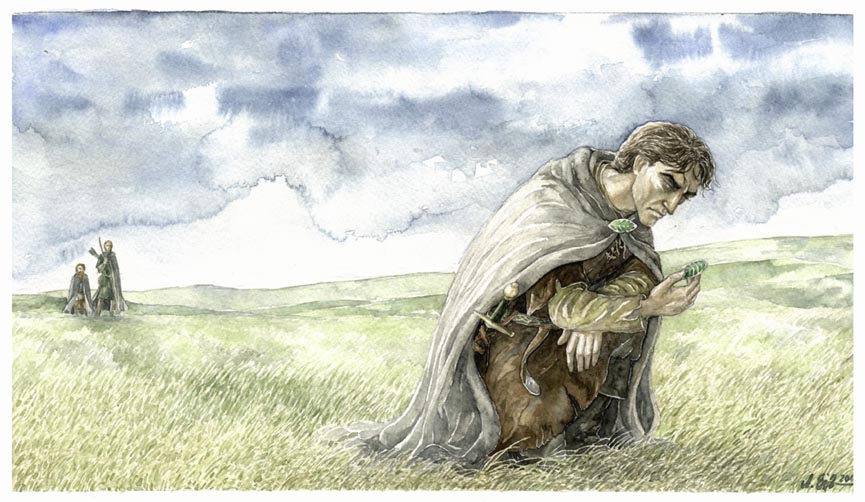
Aragorn is first introduced to the reader through Frodo’s observation of “a strange-looking weather-beaten man” with well-fitted boots that “had seen much wear”19 as had his travel cloak when he first appears in the narrative. He is, beyond a doubt, a traveller, presumably one who travels on foot with his long legs, which are also remarked upon in this first scene. This impression is confirmed by Barliman Butterbur who reinforces it by identifying him as “Strider”.20 He is one of the travelling rangers, Barliman does not really know what they do other than travel around, and he cautions Frodo against the shifty character. Most centrally, though, the image of an experience-hardened traveller and walker emerges.
That this introduction is no mere coincidence or incidental observation becomes apparent throughout the story as he marches the Hobbits to Rivendell and then the whole fellowship to Lothlórien and beyond, becoming one of the Three Hunters who traverse the Plains of Rohan in record time, later travelling the Paths of the Dead with his companions and on to Minas Tirith and the Morannon. Moreover, the reader is frequently reminded that Aragorn had been there before, be it through his memories or via the allusions to the many regional names he is known by, as observed by Janet Brennan Croft.21
The unfolding plot belies Barliman’s assessment of untrustworthiness but strongly affirms his identification of Aragorn as a relentless traveller. It is also reinforced, however, upon Aragorn’s coronation when he chooses “Telcontar” as his royal epithet: Strider in Quenya. This is more than just an affirmation of his continued commitment to protecting the Hobbits, as Brennan Croft argues,22 but further proof that “[p]ersonal identity [is] tied to one’s name”.23 His epithet even gets its own chapter title, incidentally the only one in the whole book that is nothing but a character’s name. From beginning to end, Aragorn is a wanderer – to the very end and beyond the recorded story, from even the first lines of Bilbo’s poem for him: “Not all those who wander are lost”!24
Odysseus the Wanderer
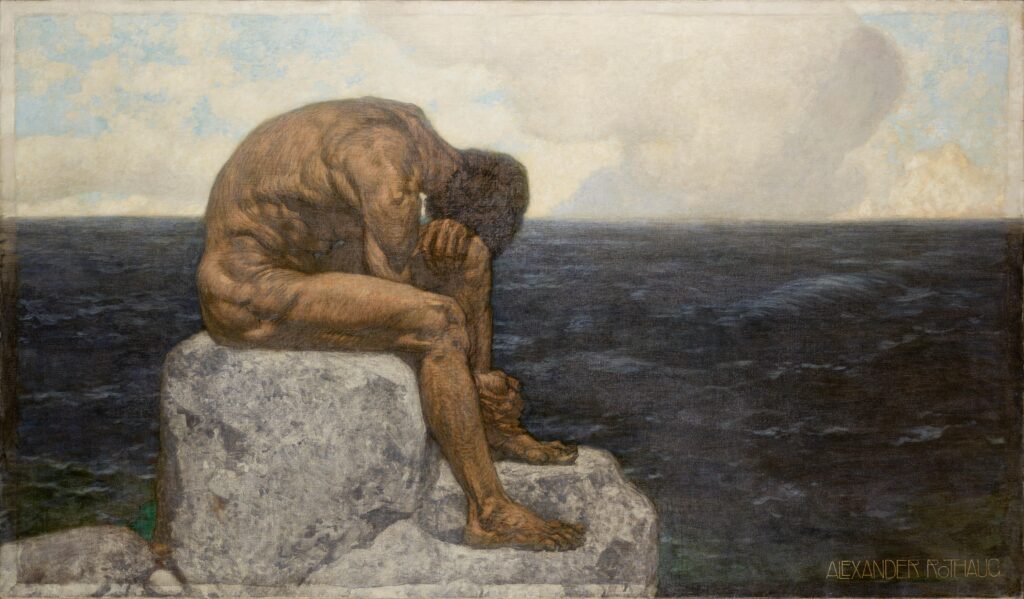
Some of those who wander are lost, however, like Odysseus. Is Bilbo’s poem a veiled allusion to Homer’s Odyssey? ἄνδρα μοι ἔννεπε, μοῦσα, πολύτροπον is the opening line – “[t]ell me about a complicated man”25 in Emily Wilson’s translation or “[s]ing to me of the man, Muse, the man of twists and turns”26 according to Robert Fagles. Both translations, accurate as they are, introduce a complication which necessitates a closer consideration of the Greek text to highlight Odysseus’ introduction as a traveller.
Odysseus, his name will not appear until the twentieth verse of the epic, is introduced as an ἀνήρ πολύτροποσ (aner polutropos), which Wilson renders as “complicated” but is more frequently translated to mean something like “much-travelled”. Literally, the word πολυ-τροποσ means “much-turned”, hence Fagles’ “of twists and turns”, and has given translators cause for thought for centuries due to its potential double meaning. It is used by Homer only to refer to Odysseus (and to Hermes, if one accepts the authorial attribution of the Hymn to Hermes), and comparing dictionaries and the prominent traditions of translations reveals the balance they need to strike between two main meanings: something itinerant, certainly geographical on the one hand, and something more akin to versatility on the other.
Emily Wilson’s translation project, aiming to correct or actively nuance one-sided translation traditions in general, does my argument a disservice here, as it veils the dominant tradition of translators, focusing rather on the itinerant part; after all, this is what Odysseus is best known for.
The British standard dictionary Liddell-Scott-Jones lists πολύτροποσ as “much-turned, i.e. much-travelled, much-wandering, turning many ways”27 while acknowledging the meaning of “shifty, versatile, wily” when speaking of Hermes in the (Homeric) Hymn to Hermes or when Plato spoke of Odysseus in his dialogue Hippias Minor. Autenrieth (“of many shifts, versatile),28 as well as the German school-dictionary Gemoll (“vielgewandt, verschlagen”, ca. versatile and wily)29 prioritize the versatility-aspect, whereas Pape lists both aspects (in der Welt herumgeworfen […] mit dem Nebenbegriffe des daraus sich ergebenden Listig- u. Verschlagenseins”, ca. thrown around in the world with the additional sense of cunning and wiliness)30 but nothing reaches the elegance of the French “qui se tourne en beaucoup de sens” (who twists/turns himself in multiple senses [of the term]).31
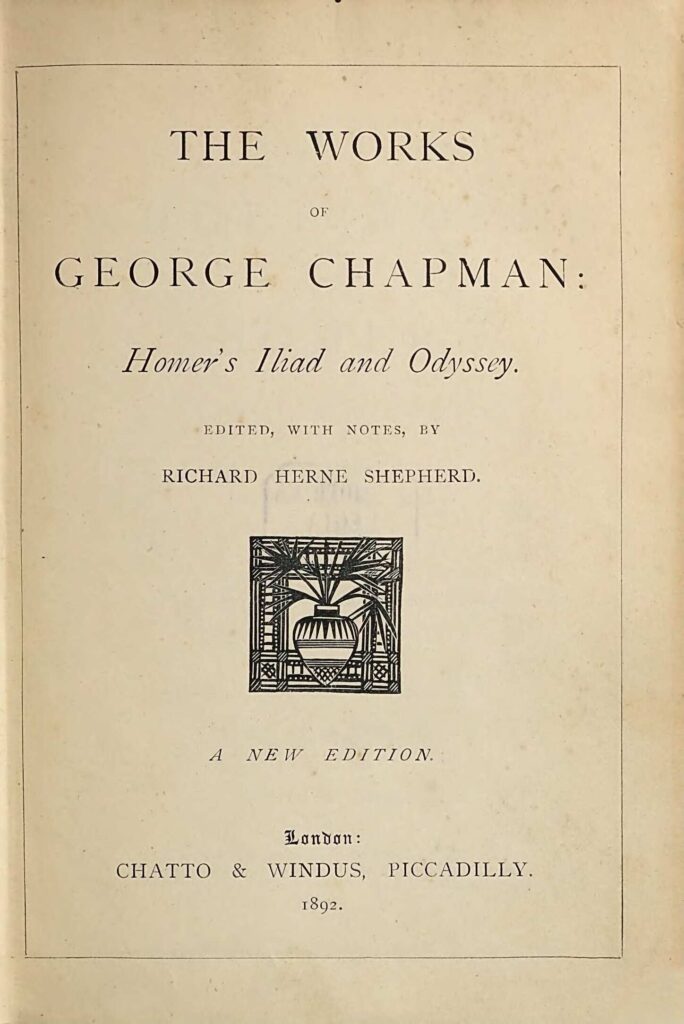
Translators historically favoured the itinerant meaning: other than Wilson’s “complicated” and Rieu’s “resourceful man”32, there is Pope’s unwieldy “for wisdom’s various arts renown’d”33 – a translation which Tolkien apparently also owned.34 Cowper’s inelegant “for shrewdness famed / And genius versatile”35 stands opposite the more prominent “hero who travelled far and wide” by Butler,36 “who wandered far and wide” by Butcher/Lang,37 “so many roundabout ways / To wander” by Mendelsohn,38 “vielgewandert” (much-wandered) in the influential German Voß-translation,39 and Chapman’s “that many a way / wound”40 – the very Chapman that so deeply inspired Tolkien’s love for words. Robert Fagles’ “a man of twists and turns” seems to strike a good balance, leaving the exact meaning open to interpretation.
Odysseus is a highly complicated man – one may wish to read Margaret Atwood’s amazing Penelopiad41 to perceive the aptness of Emily Wilson’s less ambiguous translation – but the text also introduces him as a much-travelled man, the trait for which he would win immortal fame, with unending journeys being referred to as odysseys to this day. That the plot bears out this characterization – as it does the one as a shifty character, incidentally – seems superfluous to point out, and the examples for that are too numerous to quote here. The Odyssey is about a wandering (and cheating) man. Those with some experience in ancient texts will not need to read the entire Odyssey to understand this, but be familiar with the concept of the incipit, not only as an identifier of texts but moreover as a summary of the text’s content and theme.
The beginning of a text – incipit is simply Latin for ‘it begins’ – has historically been used in lieu of a title, either in cases where a work’s original title has been lost, or one never existed in the first place. From some Quranic surahs and books of the Bible to secular texts from antiquity and the Middle Ages to papal bulls, encyclicals, and council documents in today’s Catholic Church, this tradition has innumerable examples. Mindful of that tradition, the beginning of a text often reflects its general content and themes. Numerous examples illustrate this point across multiple traditions – think of בְּרֵאשִׁית (bereschit) meaning “in the beginning” for the Judaeo-Christian book of creation and formation of the people of Israel – and Homer is no exception: μῆνιν ἄειδε θεὰ – “of the wrath sing, o goddess” is the opening line of the Iliad, a text following the wrath of Achilleus. Positioning Odysseus prominently as ἀνήρ πολύτροποσ is therefore no coincidence but must be understood as a conscious effort by the poet of the Odyssey to immediately characterize him, and give not only a concise summary of the whole work’s plot and theme but also of its main protagonist. Odysseus is not only a heroic warrior returning home – contrast the arma virumque cano, “of weapons and man I sing” of Virgil’s Aeneid – but a complicated and cunning long-time traveller first and foremost.
Conclusion
Both Aragorn and Odysseus, therefore, are primarily travelling men. This does not remain their only character trait, and their respective journeys (both external and internal/mental) take vastly divergent paths. But at the moment of their introduction, as well as through their lasting legacy – the contemporary meaning of ‘odyssey’ in one case, the name of the Royal House of Telcontar in the other – both men are identified as wanderers, and linked to this characteristic by their most prominent epithet.
That this is merely a coincidence seems unlikely. Tolkien, so steeped in the Classics that he attributes his love for literature to the “delight [of] first looking into Chapman’s Homer”,42 even decades later, may well have been aware of the echoes he evoked and the parallels he drew from the Cauldron of Stories when constructing his Aragorn as a wanderer first and foremost: another “man, O Muse […], that many a way / Wound”.43 He may have, as John Garth claims, “turned his back enthusiastically on the Classics” but had clearly returned to an appreciation of what “had nurtured his generation at school”44 by the time he wrote his greater works. He will have been aware of Odysseus as an ἀνήρ πολύτροποσ and also of its dual meaning, if not only the itinerant one. Aragorn is not just Odysseus, neither is he the Middle-earth version of him, but his character, description, plot, and epithets are deeply indebted to Homer’s Odysseus, as they are to many other influences which are revealed through the thorough study of the texts and drafts given us by Professor Tolkien and his son Christopher. “There is a great deal of Greek mythology assimilated and transformed within the Legendarium, albeit unacknowledged.”45 It is the aim of this blog post to contribute to the ongoing closing of this acknowledgement-gap. What better time to do so than when another Christopher has catapulted the Odyssey to the forefront of popular discourse again?
- Shippey, Tom. J.R.R. Tolkien. Author of the Century, London 2000; 314. ↩︎
- Williams, Hamish. “Tolkien the Classicist: Scholar and Thinker” in Hamish Williams (ed.), Tolkien and the Classical World, Zürich 2021, 3-36; 5. ↩︎
- Tolkien, J.R.R. “Letter 142 To Robert Murray SJ” in The Letters of J.R.R. Tolkien, edited by Humphrey Carpenter, London 2nd2023; 258. ↩︎
- Tolkien, J.R.R. “English and Welsh” in The Monsters and the Critics And Other Essays, edited by Christopher Tolkien, London 1983, 162-197; 192. ↩︎
- This text pretends to believe in the theory of one author, named Homer, for both Iliad and Odyssey for simplicity’s sake. The wider ongoing discussion about the identity of the poet(s) is of no relevance to the topic of this examination of parallels between Aragorn and Odysseus. ↩︎
- Cf. Carpenter, Humphrey. J.R.R. Tolkien. A Biography, London 1977; 57. ↩︎
- Tolkien, J.R.R. The War of the Ring, edited by Christopher Tolkien, London 1990; 229. ↩︎
- Cf. Tolkien, J.R.R. „On Fairy-Stories“ in The Monsters and the Critics And Other Essays, edited by Christopher Tolkien, London 1983, 109-161; 125f. ↩︎
- For an overview until the 2000s, see Nagy, Gergely. „Saving the Myths: the Recreation of Mythology in Plato and Tolkien“ in Jane Chance (ed.), Tolkien and the Invention of Myth: A Reader, Lexington 2004, 119-132 and Spirito, Guglielmo. „The Legends of the Trojan War in J.R.R. Tolkien” in Hither Shore 6 (2009), 182-200, or Scull, Christina/Hammond ,Wayne G. „Classical Influences“ in The J.R.R. Companion & Guide. Reader’s Guide. Part I: A-M, London 22017, 242-244 for an updated account until the mid-2010s. ↩︎
- Larini, Gloria. “Giant, Solitary, and Anarchist. The Trolls in The Hobbit and Polymphemus in the Odyssey” in Arduini, Roberto et.al. (edd.) Tolkien and the Classics, Zürich 2019, 3-12; 3. ↩︎
- Cf. Larini, Gloria. “Giant, Solitary, and Anarchist. The Trolls in The Hobbit and Polyphemus in the Odyssey” in Arduini, Roberto et.al. (edd.) Tolkien and the Classics, Zürich 2019, 3-12. ↩︎
- Cf. Greenman, David. „Aeneidic and Odyssean Patterns of Escape and Return in Tolkien’s The Fall of Gondolin and The Return of the King“ in Mythlore 18.2 (1992), 4-9. ↩︎
- Morse, Robert E. Evocations of Virgil in Tolkien’s Art, Oak Park, IL 1986, 17. ↩︎
- Ibid., 18. ↩︎
- Ibid., 19. ↩︎
- Cf. Scull/Hammond. “Classical Influences”; 243f. ↩︎
- https://en.wiktionary.org/wiki/odyssey; last accessed: 10.07.2026. ↩︎
- https://en.wikipedia.org/wiki/Nostos, last accessed: 10.07.2026 ↩︎
- LotR 1:ix, 156. Quoted from the 50th Anniversary Edition, London 2004. ↩︎
- Ibid. ↩︎
- Cf. Brennan Croft, Janet. “Túrin and Aragorn: Evading and Embracing Fate” in Mythlore 29.4 (2011), 155-170. ↩︎
- Cf. Ibid.; 168. ↩︎
- Ibid.; 166. ↩︎
- LotR 1:x, 170. ↩︎
- The Odyssey, translated by Emily Wilson, New York 2018; 105. ↩︎
- The Odyssey, translated by Robert Fagles, New York 1996; 77. ↩︎
- Liddell, Henry George/Scott, Robert. A Greek-English Lexicon, revised and augmented throughout by Sir Henry Stuart Jones, Oxford 1940; https://www.perseus.tufts.edu/hopper/text?doc=Perseus%3Atext%3A1999.04.0057%3Aentry%3Dpolu%2Ftropos; last accessed 10.07.2026. ↩︎
- Autenrieth, George. A Homeric Dictionary for Schools and Colleges, New York 1891; https://www.perseus.tufts.edu/hopper/text?doc=Perseus%3Atext%3A1999.04.0073%3Aentry%3Dpolu%2Ftropos; last accessed: 10.07.2026. ↩︎
- Gemoll, Wilhelm/Vretska, Karl. Gemoll. Griechisch-deutsches Schul- und Handwörterbuch. München 102006, 663. ↩︎
- Pape, Wilhelm. Handwörterbuch der griechischen Sprache. 2, Griechisch-deutsches Handwörterbuch; Lambda – Omega, Braunschweig 1843; 639. ↩︎
- Bailly, Anatole. Dictionnaire Grec-Français, Paris 42020; 1926. ↩︎
- The Odyssey, translated by E.V. Rieu, London 1946; 36. ↩︎
- The Odyssey of Homer, translated by Alexander Pope, Edinburgh 1870; https://www.gutenberg.org/files/3160/3160-h/3160-h.htm#chap01; last accessed: 10.07.2026. ↩︎
- Cf. Cilli, Oronzo. Tolkien’s Library. An Annotated Checklist, Edinburgh 2nd2023; 135. ↩︎
- The Odyssey of Homer, translated by William Cowper, London year unknown; https://www.gutenberg.org/files/24269/24269-h/24269-h.htm; last accessed: 10.07.2026. ↩︎
- The Odyssey, rendered into English prose, by Samuel Butler, London 1900; https://en.wikisource.org/wiki/The_Odyssey_(Butler); last accessed: 10.07.2026. ↩︎
- The Odyssey of Homer, done into English prose by S.H. Butcher and A. Lang, New York 1906; 1. A. Lang is, of course, the same Andrew Lang in whose honour Tolkien delivered his famous „On Fairy-Stories“ at the University of St. Andrews on on 8 March 1939. ↩︎
- The Odyssey, translated with an Introduction and Notes by Daniel Mendelsohn, Chicago 2025. ↩︎
- Ilias und Odyssee, übersetzt von Johann Heinrich Voß, Frankfurt am Main 2008; 811. ↩︎
- The Odysseys of Homer, translated according to the Greek by George Chapman, London 1897; 1. ↩︎
- Atwood, Margaret. The Penelopiad, Edinburgh 2005. ↩︎
- Tolkien, J.R.R. “English and Welsh” in The Monsters and the Critics And Other Essays, edited by Christopher Tolkien, London 1983, 162-197; 192. ↩︎
- The Odysseys of Homer, translated according to the Greek by George Chapman, London 1897; 1. ↩︎
- Garth, John. Tolkien and the Great War. The Threshold of Middle-earth, London 2003, 42. ↩︎
- Librán-Moreno, Miryam. „Parellel Lives: The Sons of Denethor and the Sons of Telamon“ in Tolkien Studies 2(2005), 15-52; 15. ↩︎
Picture credits
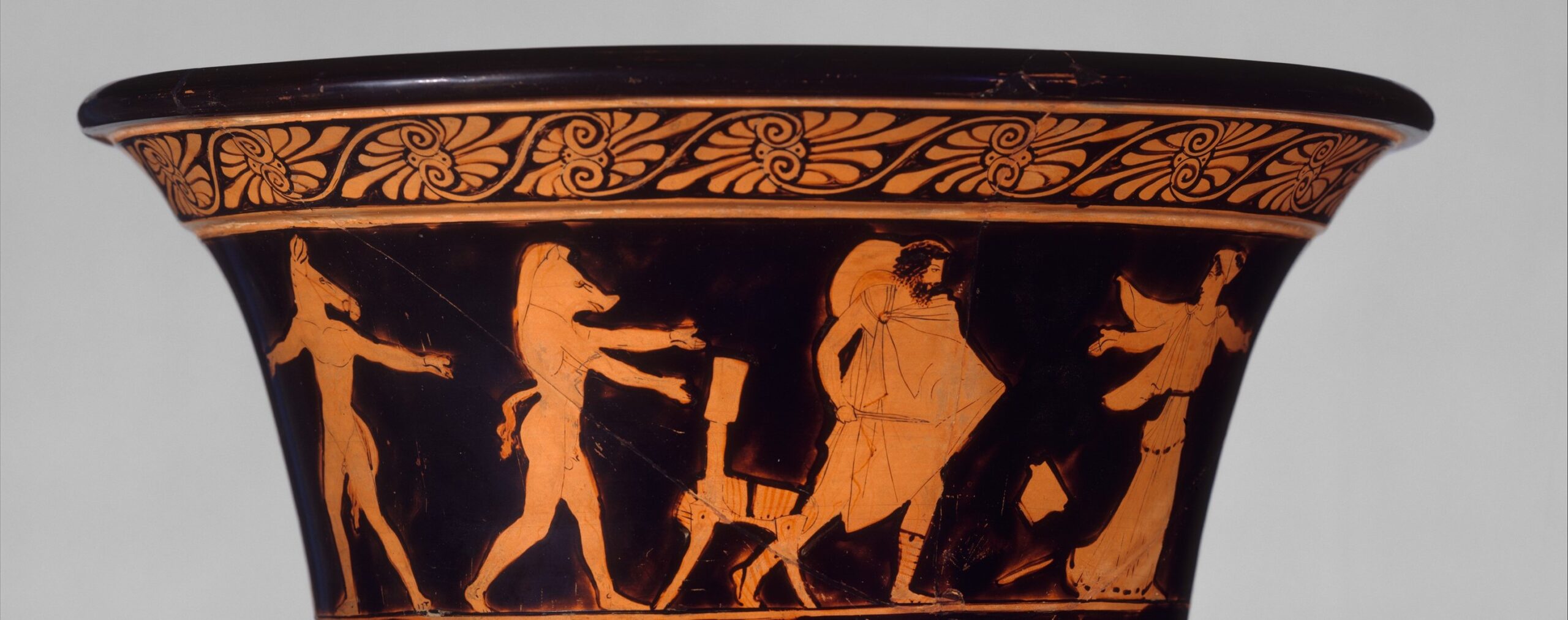
Featured image Terracotta calyx-krater (bowl for mixing wine and water). Attributed to the Persephone Painter. ca. 440 BCE. The Met.
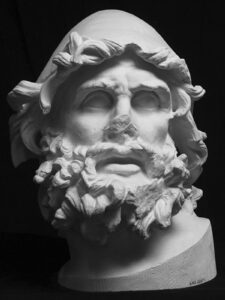
- Odysseus fra Polyfemgruppen – National Gallery of Denmark, Denmark – Public Domain.
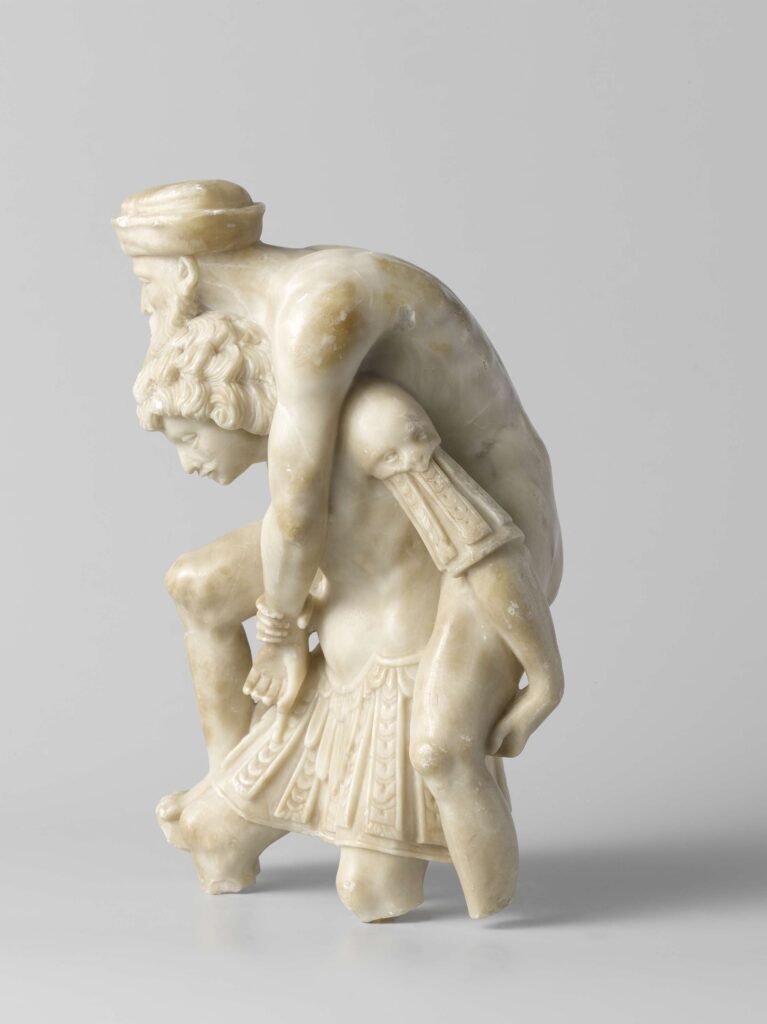
- Aeneas en Anchises – Rijksmuseum, Netherlands – Public Domain.
- The Elven brooch. (c) Anke Eissmann. By kind permission.
- The whole works of Homer, Prince of Poets : In his Iliads, and Odysseys. Translated according to the Greek by Geo. Chapman – Bayerische Staatsbibliothek. NoC-NC 1.0.
- Odysseus (Sehnsucht nach der Heimat) von Alexander Rothaug – Österreichische Galerie Belvedere, Austria – CC BY-SA.
